The Sicilian Cart is the symbol of folklore and craftsmanship. It represents the desire and seeking of beauty of the Sicilian people – due to its nature of being a practical transportation vehicle used for work, yet made into a stunning piece of art.

If you had the pleasure of seeing one, then its intricate and rich beauty is probably vivid in your mind. However, if you have not yet experienced this work of art, let us tell you about it.
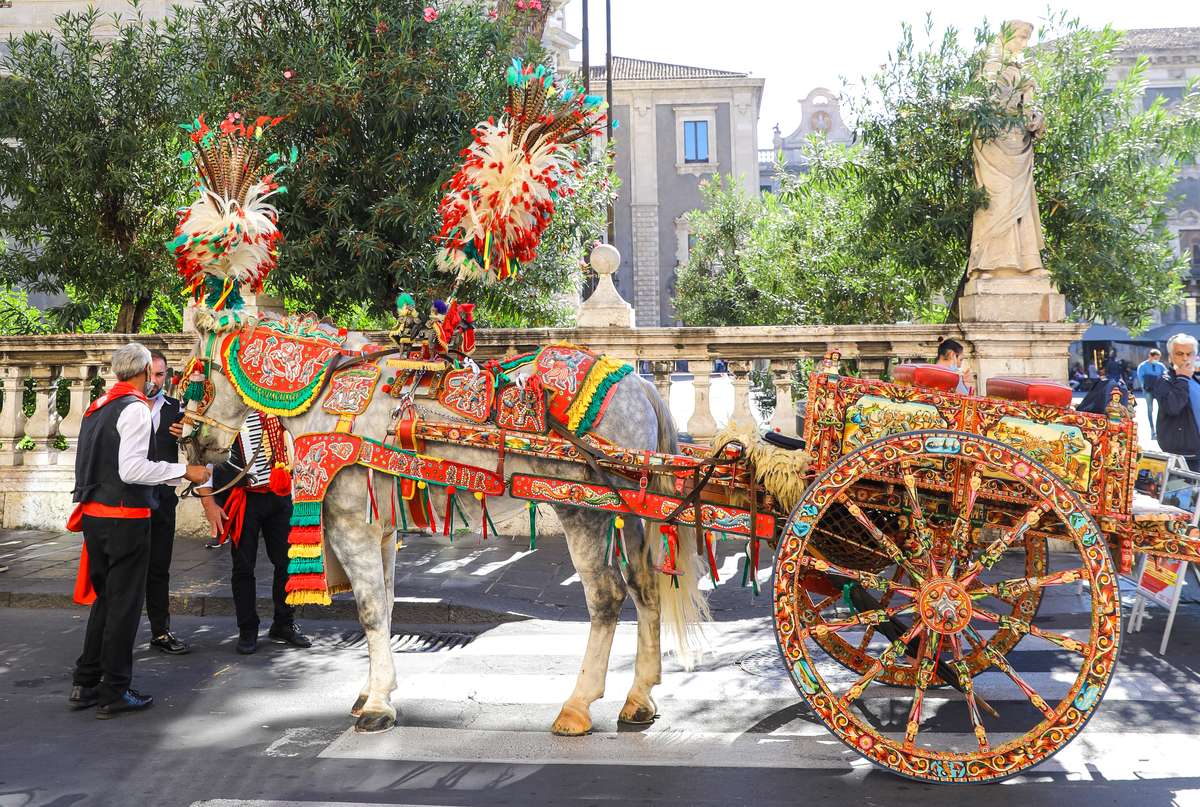
Sicilian cart with horse

What is the Sicilian cart?

The Sicilian cart is generally two-wheeled, horse-drawn carriage. It is decorated with Sicilian folk iconography in the form of paintings, sculptures and fabrics that represent moments from the island’s history, forms epic stories of popular religion or depicts scenes from everyday life and nature.

The decorations cover the entirety of the cart and use vivid colors of reds, yellows, oranges. The Sicilian cart is an ode to Sicilian history and the way of life on the island.

In recent times,  the Sicilian cart exists as a unique mode of transportation used mostly for special events, weddings and folkloristic feats. For example, it plays an important role in the Festa di Sant’Alfio which takes place in the village of Trecastagni.

The carts, that leave at night from Catania and from other Etnean villages, arrive at Trecastagni in the morning, gathering in the square of the village.

In Catania, Palermo and other towns of Sicily, there are  notable schools specialising in the construction and decoration of the cart.

It is worth acknowledging the works of Bagheria and Aci S. Antonio, known for the paintings of the carts, and those of Floridia, Vittoria, Valguamera and Scordia.
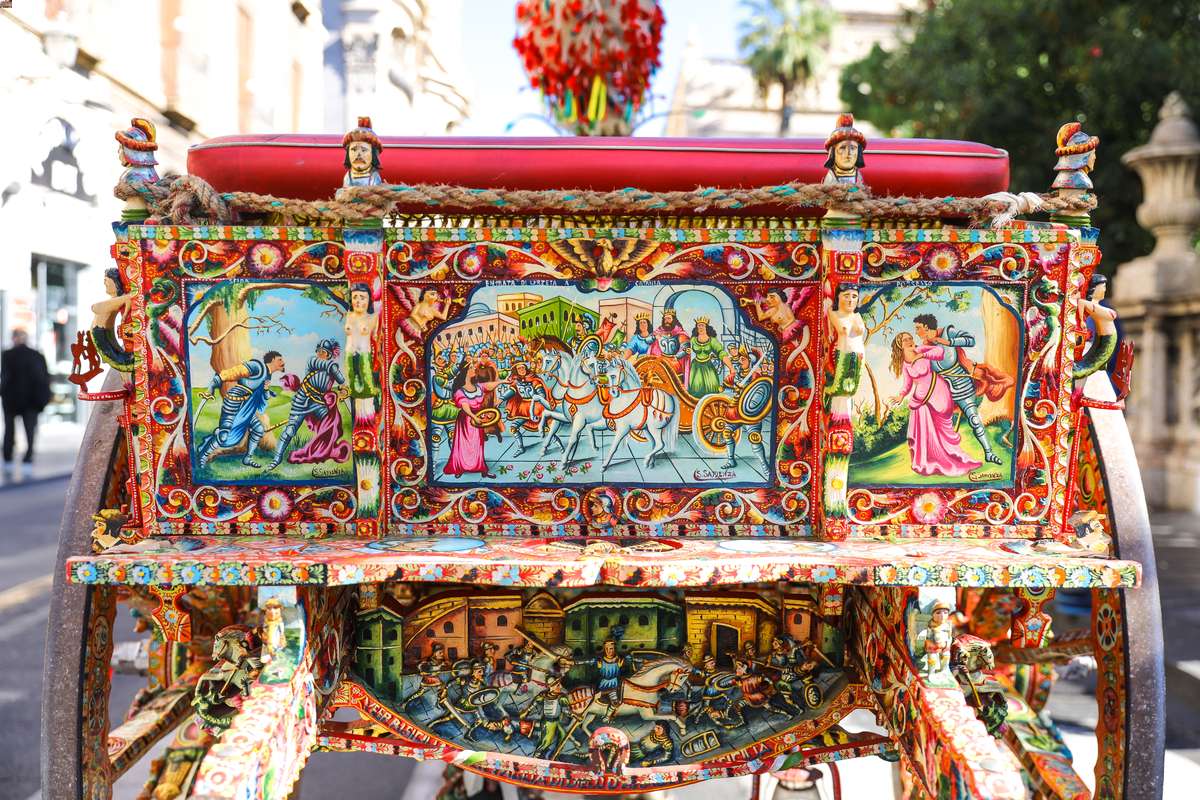
Sicilian cart detail

The history of the Sicilian cart

It wasn’t until the end of the 18th century that road conditions improved enough in Sicily to allow transport by wheeled carts.

Previous to this, most of the island’s transportation was done by boats or mules. Transporting goods with a cart was a prestigious occupation and owning a horse drawn cart was a status symbol and demonstrated wealth and success.

Hence, the embellishment of the carts began. The more intricate the cart was decorated the more the businessman had invested in a talented craftsman, hence showing off his wealth.

The creation of a cart required a complex organization of tasks and involved multiple groups of skilled craftsmen with different specializations.
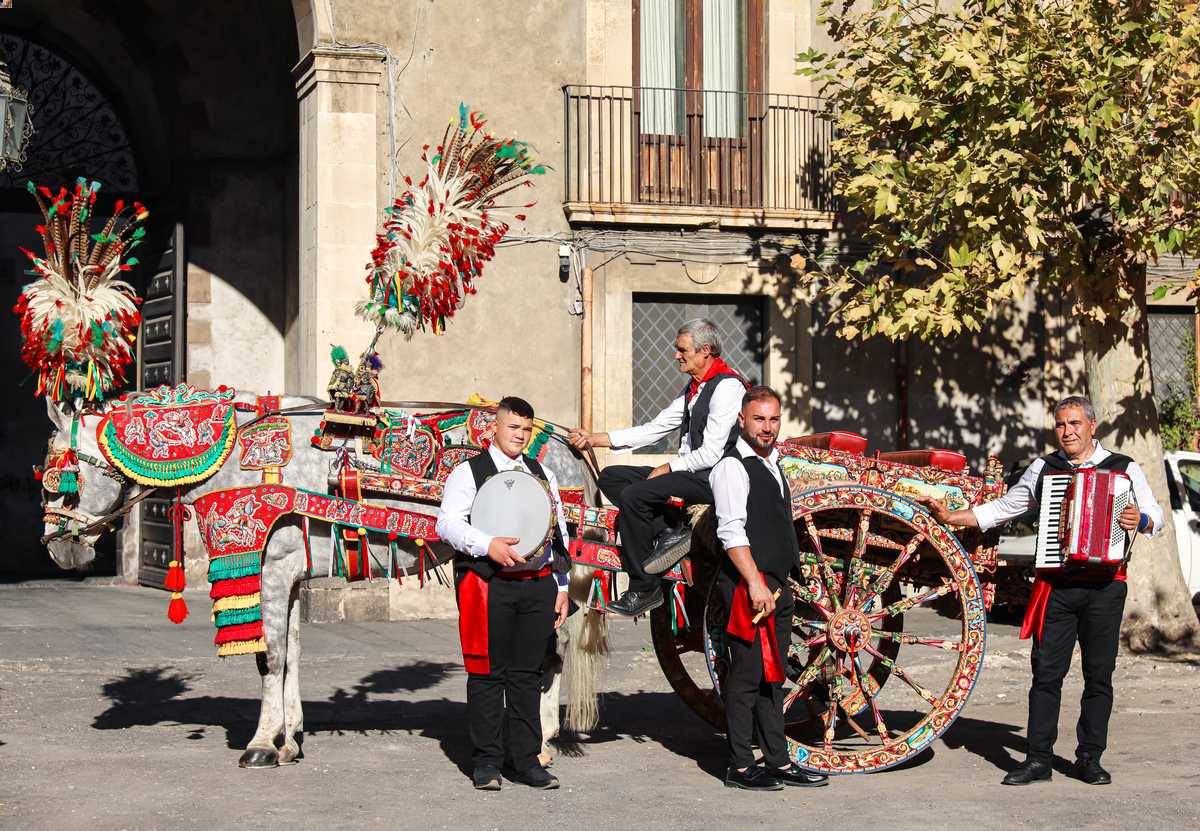
View of sicilian cart

The use of the Sicilian cart today and tours

Today, the Sicilian cart appears primarily at special events and weddings. It is the perfect addition of Sicilian tradition that brings an authentic presence and is loved by guests young and old.

Due to its traditional beauty and interesting history, many visitors to Sicily love to get familiar with the Sicilian cart. We offer tailored tours and experiences with Sicilian carts, allowing you to do just this.

Why not sit back and enjoy being at the centre of attention as you ride through the heart of Taormina on board of a traditional Sicilian colorful cart. Alternatively, you could discover the secrets of Catania through its beautiful buildings and churches onboard a Sicilian Ape Car decorated by a local artist.

Contact us and we can make this special experience happen. It will surely be a memorable and joyful addition to your trip in Sicily.
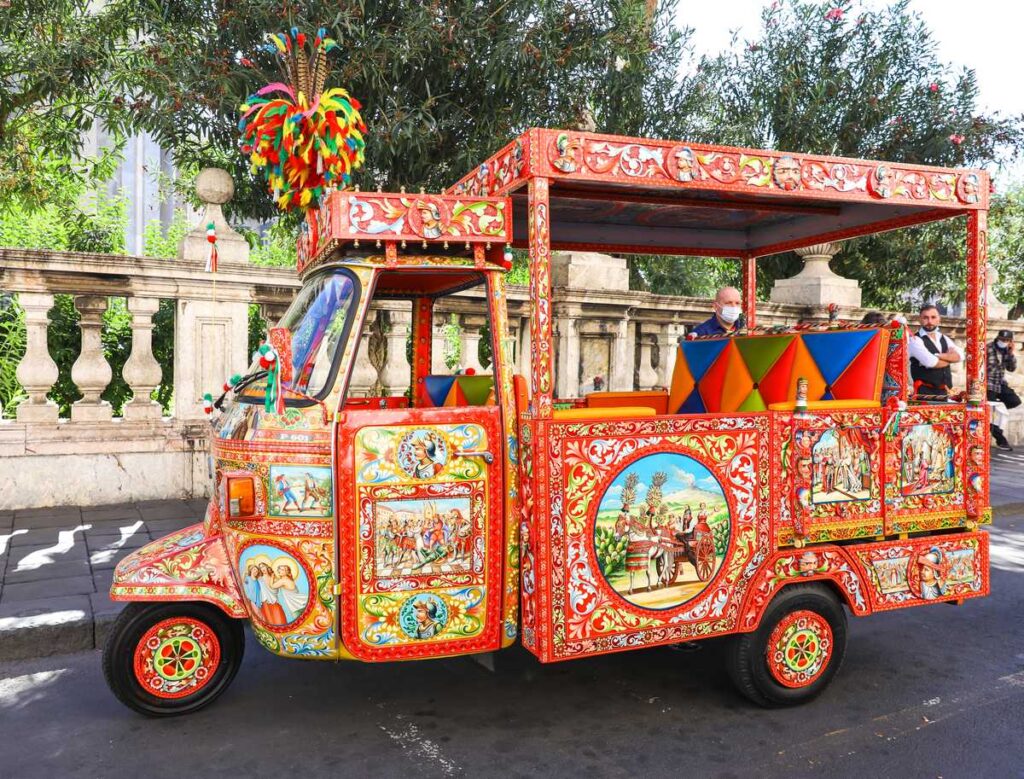
Ape car with Sicilian cart design

The future of the Sicilian cart

With the introduction of motorized vehicles, the cart has lost its original purpose of transporting goods and has taken on a symbolic role of cherishing folklore, becoming the relic of a now endangered set of customs and traditions. Currently the carts are used for events and special occasions and can often be admired at public festivals.

Although it is much rarer now, the knowledge of cart making artisans has not disappeared. Passed down from father to son, these rich and complex skills are continued by craft families like the Cinabro family in Ragusa, who help to keep the tradition alive.

The younger generations also shape and form the tradition. Keeping up with the times, they apply their mastery to new mediums such as cars, appliances, murals, etc. Like this line of SMEG appliances designed with the motifs of the Sicilian cart by the Cinabro family for Dolce & Gabbana. The luxury brand itself has taken inspiration from the cart, as a symbol of Sicilian tradition and folk iconography.

For those interested in the finding out more about the history of the Sicilian cart, we also recommend a visit to the Museo del Carretto Siciliano in Bronte, in the province of Catania.
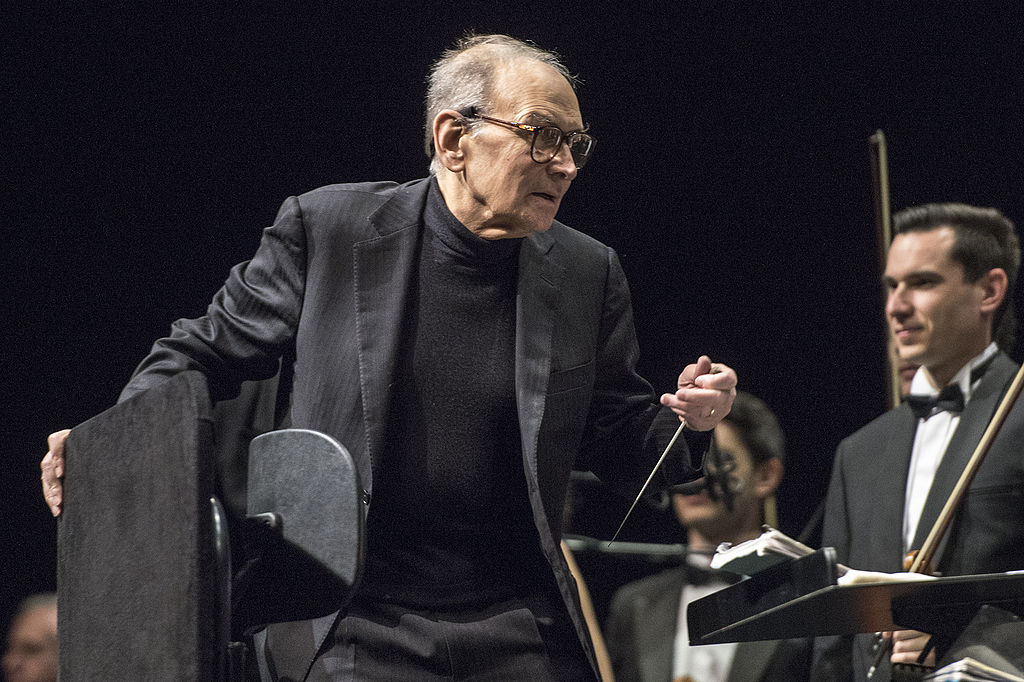


Goodbye Maestro

Ennio Morricone, one of the most brilliant Italian composers of all times, has passed away on July 6th, 2020 at the age of 91. Our nation lost a beloved artist, but his work will be forever cherished by Sicilians, Italians and all music lovers around the world.

Ennio Morricone’s work and his film scores are forever connected with the history of cinema: Once upon a time in America, the entire Spaghetti Western genre, Mission are just a few of the music score masterpieces he composed.

The Maestro had a special connection to Sicily – both through his wife and his work. Despite his international recognition and fame, it is with a Sicilian director that he had the most enduring partnership: Giuseppe Tornatore.

As the Maestro once said, “I married a Sicilian and this allowed me to fully understand the Sicilian culture, but it was through the art of Giuseppe Tornatore that my beliefs about this island were proved to be real”.

Ennio Morricone directing
Sven-Sebastian Sajak, CC BY-SA 3.0, via Wikimedia Commons

The long friendship (and partnership) with Giuseppe Tornatore

The long lasting partnership between the Maestro and Giuseppe Tornatore is quite consistent and in fact includes 13 movies, among which three movies best represent Sicily in all its beauties and contradictions: Nuovo Cinema Paradiso (1988), Malena (2000) and Baaria (2009).

Nuovo Cinema Paradiso, shot between Bagheria, Cefalù and Castelbuono, was the first collaboration between Morricone and Tornatore.

When Ennio Morricone was first asked to compose the music for this film, he rejected the offer as he was already committed with a Hollywood production, but when he was given the script of the movie, he got emotional reading the last scene (the legendary censored film kisses montage) and finally said yes. The film score written by Ennio Morricone and the cinematography of Giusppe Tornatore brought to life one of the most beautiful and nostalgic portrayals of Sicily and Sicilians and won the Academy Award for the best Foreign Language film in 1990.

Another example of a perfect combination of filmmaking, music, and photography is Malena which is always considered as a controversial movie due to the sexual themes and the depiction of a very close-minded and sexist behavior of the Sicilian People.

Ennio Morricone music themes perfectly accompany the beautiful Monica Bellucci as she walks across the square of the Duomo in Siracusa under the judgmental looks of the women and the adulatory ones of the men.

The music in Malena is a perfect mix of Sicilian sounds: the music of the traditional processions of Saints and more intense music that can convey the tragedy of a woman whose beauty becomes a curse.

We can find the same atmosphere in the commercials shot by Tornatore for Dolce & Gabbana in 1995 and 2003 featuring once again the beautiful Monica Bellucci. The black and white and the dramatic music of Ennio Morricone show Monica Bellucci as a Sicilian femme fatale chased and desired by Sicilian men.

Ennio Morricone will compose again for Dolce & Gabbana, this time with the great Sophia Loren in the beautiful setting of Villa Valguarnera in Bagheria.

Baaria, Sicilian for Bagheria, is important for Ennio Morricone for several reasons: it is the home town of his artistic son Giuseppe Tornatore and it is the town that in 2006 tributed Morricone with the honorary citizenship, making the Maestro an effective citizen of this beautiful Sicilian noble town. But Baaria is also yet another product of Tornatore and the Maestro partnership, a pure declaration of love to Bagheria and Sicily that encompasses 50 years of Sicilian history. It is in the piece “Symphony for Baaria” that we find all the love and respect that Morricone had for this ancient noble town and for the traditional music and Sicilian instruments like Zampogna and Marranzano.

Although Ennio Morricone lived all his life in Rome, it is undeniable that with his compositions he could convey emotions and feelings of “ Sicilianity” as only a true Sicilian would.

The pain and nostalgia of leaving Sicily to find fortune abroad in Nuovo cinema Paradiso, the feelings of lust and love for a Sicilian woman in Malena and the sounds of the marranzano and the voices of the people of Baaria transformed in music will forever be his gift and his immortal legacy to Sicily.


Listed as one of the New York Times top 1000 best films of all time, a part of Il Postino was filmed on Salina, one of the Aeolian islands.  Pollara, a beach particularly chosen for its nature and landscape, is present in all of the scenes when Massimo Troisi (Mario, in the film) pedals through the mountains bordering the cobalt sea.  It is also the setting of various scenes when characters are shown walking and talking along a narrow rocky beach settled between the sea and a cliff. They stop on the so-called “Postman’s Beach”, characterized by a hole in the rocky wall and overlooking the island of Filicudi.  Due to constant sea erosion this beach is at a risk of disappearing completely.

This site is registered on wpml.org as a development site. Switch to a production site key to remove this banner.